
🍄What is microdosing?
Microdosing or “mini dose” is the consumption of a lower than usual dose, sub-hallucination and without psycho-active effects of psychedelic substances. Microdosing can be done with a variety of substances, but the most popular and practical use is with “classic” psychedelic substances such as mushrooms containing the substance psilocybin, (usually from the Cubensis strain), or LSD microdosing (LSD) which was originally discovered in 1938 by the chemist Albert Hofmann when he synthesized the substance from ergot fungi growing on rye and other grain. In addition there is also microdosing of a mushroom called “Amanita Muscaria“, which contains different psychoactive substances (ibotenic acid and muscimol), but in this guide we will focus on psilocybin mushrooms and LSD.

Disclosure
The content is not a recommendation! The content is research-based, but does not replace medical advice. Moreover, as of 2024, the use of psychoactive substances are still illegal in most countries. We do not encourage violation of the law or the use of dangerous substances.
Official Definition for Microdosing
“Microdosing involves repeated intermittent self-administration of small amounts of psilocybin or LSD or some other substances
At doses large enough to improve daily activities & conditions, Yet small enough so that normal Consciousness is not clouded or impaired.”
Microdosing compared to common use
A significant difference between the microdosing process compared to “regular” use is that the amount of substance must be low enough so that there are no effects such as: visual effects, uncontrollable laughter, inability to sit still, extreme fears, anxiety, uncontrolled joy, and so on. In fact, any effect that interferes with the user’s daily functioning indicates directly that the doses are higher than required for microdosing doses.
Psychedelics enhance sensory perception
If we need to explain in one sentence the main effect of psychedelics, it’s that they help us notice things we haven’t noticed before, which is why they are called consciousness expanders and not just consciousness changers. During the expanded consciousness state, you can see and experience inner and outer things that are not normally visible or hidden in the subconscious. Afterwards, if a conscious and planned process is done, these insights can be preserved by integrating them into the personality and daily life.
Classification of types of sensations and emotions
External senses
Sight, hearing, smell, touch, taste. Their purpose is to help us process information from the environment into the experience of consciousness.
Internal senses
Thirst, hunger, pain, pleasure, choking. Their purpose is to help maintain physiological balance.
Emotional senses
Joy, anger, fear, sadness, jealousy, love. These are emotional systems deeply embedded in ancient parts of the brain and shared by humans and mammals, and help us in the process of thinking, behavior and decision making. Emotional sensations have a physical expression, you can feel in the body sensations such as fear, anger or joy.
What is the Default Mode Network?
The default mode network (DMN) is a group of brain regions that show higher activity when we are at rest, not focused on the outside world, and engaged in introspective activities such as daydreaming, recalling memories, or contemplating the future.
It was discovered by accident in the late 1990s when researchers noticed certain brain regions remained active even when participants were not engaged in any specific tasks.
let’s explore some practical examples of how the DMN influences our daily lives:
Driving a Car
When you drive a familiar route, your DMN kicks in. You might find yourself thinking about other things while still managing to navigate and operate the vehicle smoothly. This happens because your brain has automated the process, allowing you to drive without consciously thinking about every action.
Putting Clothes, showering, house chores
Getting dressed is a complex task involving many steps, but it’s something we do without much conscious thought. Your DMN allows you to perform these actions automatically, so you can think about other matters while dressing.
Exercise
Engaging in familiar exercise routines, such as lite jogging on a well-known path or following a regular workout routine, activates the DMN, . This allows your mind to wander, making room for introspective thought or planning. DMN is much less active on very physically demanding exercises where all the focus goes into the physical sensations.
By enabling us to perform these complex tasks with minimal conscious effort, the DMN not only supports our daily functioning but also provides the mental bandwidth for creativity, problem-solving, and self-reflection. This seamless integration of routine actions and introspective thought is a testament to the DMN’s crucial role in our lives.
🍄Clinical Trials
- A study led by Roland Griffiths from February 2022 was conducted on 24 patients suffering from depression, it showed that after two treatments using psilocybin for depression (not a microdose) all 24 participants showed a significant decrease in depression even after a year.
- A study from 2019 examined 278 participants to catalog the reported effects, advantages: improvement in mood (26.6%) improvement in concentration (14.8%), and in terms of negative results, physical discomfort (18.0%) increase in anxiety (6.7%).
- A clinical trial by the University of Maastricht in the Netherlands from August 2020 shows the potential of microdosing LSD or psilocybin against treatment-resistant depression.
- A study from November 2021 shows that patients on microdosing report less anxiety and more health-related motivation compared to an untreated control group.
- A study from October 2022 conducted at the University of Chicago shows that microdosing LSD increases brain activities associated with success.
The study tried to test the hypothesis whether people suffering from depression who produce less dopamine will produce more dopamine under the influence of microdosing and showed that they did.
The study further showed that there are subjective effects of microdosing compared to the control group, and in the group that consumed the most (26 micrograms of LSD) the effects were the strongest.
Furthermore, the study examined whether at lower doses (13 micrograms) when participants did not report effects, whether there was an effect and they saw that in fMRI scans there was a change in brain activity at rest (change and reduction of activity in the default mode network). - A 2022 study validates that activation of serotonin 2A receptors in the brain (what classic psychedelics do) can help with diseases such as Alzheimer’s and dementia.The researchers examined how these drugs work in the brain and found they may help the brain function better by boosting neuroplasticity and reducing inflammation. Studies in animals and humans have shown that high or low doses of these drugs may benefit treatment of depression and anxiety in Alzheimer’s patients and may even slow the progression of the disease. Overall, scientists are excited about the potential of psychedelics as a new type of treatment for Alzheimer’s and other mental health disorders.
- A clinical trial examining improvement of age-related cognitive changes using psychedelic substances.
- Psychedelics for the treatment of dementia in PSYCHOLOGY TODAY magazine.
- Microdose of LSD helps stop attacks of cluster headaches.- article from Harvard University.
- Psilocybin was found to help stop the outbreak of cluster headaches, a study examined 53 subjects suffering from cluster headaches and found that 25 out of 48 participants who consumed psilocybin reported that the attack passed. 7 out of 8 LSD users reported that the attack passed. 18 out of 19 psilocybin users reported that the attack subsided. 4 out of 5 LSD users reported that the attack subsided.
- Extensive research is being conducted by Johns Hopkins University on the subject of psilocybin therapy.
- Microdosing for the treatment of premenstrual syndrome Microdosing to reduce PMDD.
- It is not yet proven that LSD can help treat food allergies, but there is already a registered patent.
- A company called Eleusis has registered a patent for the use of LSD microdosing to prevent Alzheimer’s.
- A study showing that psychedelics help recovery after various brain injuries such as TBI, PTSD, and depression resulting from brain injury.
- A new study from 2022 from Macquarie University in Sydney Australia examined 98 people who consume microdosing, the participants reported psychological effects for 6 weeks, and it was seen that they reported a decrease in feelings of depression and anxiety.
- A joint study from the University of Barcelona and the Autonomous University examined 34 participants who consumed 0.5 grams of psilocybin, they found that there was a significant effect on brain activity compared to the control group, but did not find a clear link to improvement in health, cognitive or general mood. However, they did find that participants who detailed their study purpose had a more meaningful and empowering experience, from which it can be inferred that expectation and intention are critical in the microdosing process.
- Isabel Grabski from Harvard University explains the potential of microdosing on mental health and creating new neural connections in the brain.
- In 2020 a study was approved led by Dr. Eran Harel on psilocybin mushrooms in Israel, but in practice it does not seem to have started as of today.
- A study published on 14.3.23 that examined 13 participants who testified that they actually treated themselves on a mental level, saw cognitive improvement.

Mental disorders or unstable mental state
For people with a history of mental disorders or illnesses in the family, or people who are in a challenging and unstable emotional or physical period, it is not recommended to experiment with psychedelics, because the experience is amplified for better or worse, and in such cases psychedelics may act as a trigger for the awakening of illnesses or a flawed mental state. There are quite a few testimonies of people who experience paranoia or a type of psychosis resulting from unwise and irresponsible administration of psychedelics to unsuitable people.
With that, studies do not support the hypothesis that psychedelics are the source of the outbreak of mental illnesses, and there are also studies with results indicating that psychedelics can treat some of the mental disorders, including disorders such as depression and anxiety.
Also, for pregnant or breastfeeding women, it is not recommended to use psychedelics.
Mystical experience with no a sufficient mental foundation
In certain cases involving exposure to high amounts of psychedelics, people report profound mystical religious experiences (and there is also research basis for this). Such experiences that change or shake their entire perception of reality, for some people it can be an amazing experience, but for those who are not emotionally prepared for a mystical experience and do not have a stable foundation, the experience can become difficult and negative.
Addiction
Classic psychedelics such as LSD, psilocybin, and DMT – the substance that comes as powder (Freebase), ayahuasca or changa are not addictive, and some claim they are even anti-addictive. In contrast to the classic psychedelics, drugs such as heroin, methamphetamine, fentanyl, or cocaine have a strong physical addictive effect that should be cautioned and avoided.
Abusing Substances
As with any other substance, although these substances are considered non-addictive, there is always the possibility that people will use these substances in an unhealthy and incorrect way (ABUSE).
Abusive use can indeed be more difficult to identify and understand, because in order to identify it, it is necessary to delve into and understand the user’s behavioral patterns and consumption habits. Ultimately, unwise and irresponsible use can be abusive or at least not beneficial.
Toxicity
Classic psychedelic substances from the tryptamine family (LSD, psilocybin) are considered non-toxic or have very low toxicity, even less dangerous than coffee, and there are several studies Flanagan & Nichols, a study from the University of Debrecen in Hungary, and also an interesting presentation by Dr. Jeremy Ruskin on the healing potential of psychedelics on inflammation, concluding that there is an anti-inflammatory effect in addition to an improvement in nervous system plasticity.
However other substances used for treatment such as MDMA or ketamine (in addition to cocaine, heroin or methamphetamine) certainly have a risk of toxicity with frequent use.
LSD was made illegal in the late 1960s, a study that began in 2010 and ended in 2013 in which 57,873 participants aged 12 and older were surveyed found that over 32 million Americans have experimented with psychedelic substances in their lifetime, and since then every year there are at least another half a million users in the US alone.
A study by Columbia University shows that in 2019 alone, 5.5 million Americans experimented with psychedelic substances.
Another official survey conducted by the United States government reveals the percentages of psychedelic substance users by age and year, the survey was conducted in the years 1972-1995, and from it, it can be estimated that the total use of psychedelic substances in the US was in the hundreds of millions.
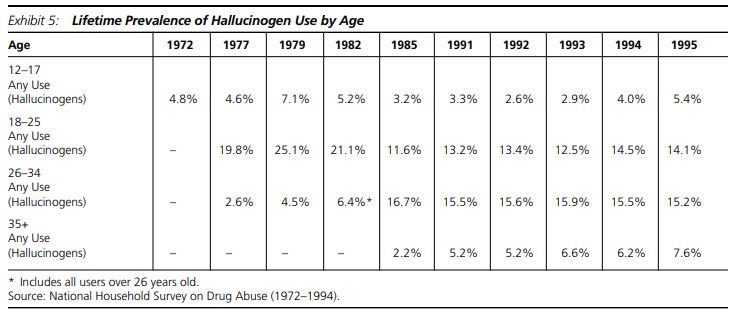
In such large numbers it can be said that the damages and dangers are already visible, and in practice the damages described below occur in low percentages.
All the dangers mentioned on this page are real and should not be taken lightly! However, if the user listens to the warnings and follows the guidelines created by people with real experience in the field – the risks are significantly reduced. Moreover, it should also be emphasized that the risk decreases when it comes to low doses as part of use for microdosing purposes only.

Before we start, we will want to examine whether the microdosing process is effective, and even whether this process is suitable for us on a personal level, at the current point in time and according to the current health condition. Therefore, we will want to choose a number of goals and objectives that will help us measure and examine whether the microdosing process indeed leads to some kind of positive change in our lives.
Choosing goals and objectives
Openness to unexpected changes
The actual changes are not necessarily the changes we expected or even wanted, because we are focused on certain changes we chose in advance, there is a possibility that we will not notice other changes that occur. Therefore, there is a need to maintain openness and attention to other changes that we did not think of at all in advance.
Examples of measurable goals
- Memory improvement – improving the speed of retrieving information.
- Improving nutrition – eating less sweets.
- Reducing the consumption of alcohol/marijuana/stimulants/coffee.
- Smiling more at people on the street.
- Creating a routine of physical and mental practice.
Examples of general goals (difficult to measure)
- Lowering levels of anxiety or depression.
- Decrease in physical or mental pain.
- Increase in creativity.
- Increase in energy levels.
- Increase in openness to experiences.
🍄Microdosing Challenges
Choosing and measuring goals
As some of the studies point out, in this article we argue that microdosing enables a conscious process, and is not a medicine in the modern sense, but rather a tool that enables a process of diagnosis, feeling, development and self-change. In order for the process to succeed and cause positive or desired effects, goals and objectives must be chosen, and try to measure them as accurately as possible. The world of modern science and medicine still does not have accurate and clear protocols regarding the choice of goals and objectives, mainly because they are personal and require a lot of preparatory work on the part of the participant.
Finding the right dosage
As long as the process is not done in a controlled environment, there is usually a problem of measuring dosages, even in psilocybin mushrooms which are sometimes eaten by eye measurement or weight that does not accurate at the gram level, or alternatively the amount of psilocybin in the mushroom varies and is not uniform over the period. Also with LSD, if the dosages are not accurate, then it is very difficult to create consistency in the experience, this is especially true when people consume LSD microdosing by cutting a cardboard in the hope that the dosage is evenly distributed.
Changes and differences in lifespan, body and nutrition
Even at the same dosages for the same participant, there can be different reactions, and this varies according to many parameters such as: general nutrition, empty stomach or not, sleep quality during the period, sensory load before and after the start of the process, changes in diet or weight and more.
Limited psycho-physiological discernment ability
Because the doses are low and the effects are minute, a large part of people do not have a developed psycho-physiological sensitivity and do not manage to put a finger on or be aware of the changes that are happening in real time, so all that was mentioned above: measurement, goals, dosages, changes in daily life, will not be identified and measured.
Effect on the Default Mode Network
The Default Mode Network is a network of regions in the brain that is active when we are at rest and not engaged in a specific task. This network was first discovered in the 1990s, when researchers used brain imaging (fMRI) and discovered that there are certain regions in the brain that show increased activity precisely when people are not performing structured tasks. The default mode network is involved in processes such as self-referential thinking, the “sense of self” (ego), reflections on the past and future, and daydreaming, for example navigating in a vehicle on a familiar route while we daydream but still know the way is related to the activity of the default mode network.
Excessive activity of the default mode network may be associated with mental disorders such as depression and anxiety. There are studies trying to understand the potential of microdosing psychedelic substances, such as LSD and psilocybin, to reduce the activity of the default mode network. Preliminary studies suggest that microdosing may help reduce repetitive negative thoughts and allow for greater cognitive flexibility, perhaps due to its modulating effect on default mode network activity. However, more research is needed to confirm these findings and understand the long-term implications of microdosing on brain health.
The Placebo Effect in Microdosing
A 2022 study tried to examine the question of whether it is possible to isolate and see the effect of microdosing compared to the placebo effect, this was done using two randomized trial groups, half were given LSD microdosing at 3-day intervals between administrations, and the second group was given another sensory-stimulating substance with sensations reminiscent of the sensations of LSD, but it was seen that the same group did not show improvement in mood or psychomotor abilities, compared to the group that consumed a mini-dose of LSD (13-26 μg) which did show improvement in mood and psychomotor abilities.

Combining microdosing with other supplements
Dr. Stamets suggests adding vitamin D3 to psilocybin microdosing in combination with another mushroom called “Lion’s Mane” which itself is characterized by properties, according to him the combination of the three enhances the process of cognitive improvement and brain plasticity.
However, it is important to say that not only is this not proven, but also Dr. Stamets has his own brand and he sells these mushrooms as a microdosing kit, so there is a financial interest on his part to promote the product.
Dr. Paul Stamets explains about the “Lion’s Mane” mushroom:
Common microdose protocols
There are two popular protocols for microdosing, one by Dr. James Fadiman and the other by Dr. Paul Stamets.
Psilocybin mushrooms
Dosages
Microdose 0.1-0.4 grams.?
Low dose 0.5-1.0 grams.
Medium dose 1.5-3.5 grams.?
High dose 3.5-5 grams.?
LSD
Dosages
Microdose 7-12 micrograms.?
Low dose 25-60 micrograms.
Medium dose 70-120 micrograms.
High dose 120-250 micrograms.?
The Fadiman Protocol
The researcher Dr. James Fadiman began his journey with psychedelic substances back in the 1960s, and since the 1970s when research into psychedelic substances became illegal, he focused on collecting data on the use of microdosing, for people who provided the information Dr. Fadiman proposed the following protocol:
Schedule
Twice a week, one day yes, then two days without, and then on the fourth day take again.
Dosage
According to data collected from thousands of microdose users, the preferred dose was between 5-20 micrograms of LSD.
Important to know
Dr. Fadiman himself said that he did not plan this as a fixed and rigid protocol, the protocol is not suitable for everyone and not intended for an indefinite period, he only suggested trying this protocol for a month or two and then deciding independently when and how it is right.

The Stamets Protocol
Schedule
Dr. Stamets suggested a protocol of consuming psilocybin mushrooms for four days, and then a break of three days, for a period of up to a month and then stop for at least two weeks to a month and evaluate progress. In addition, it is worthwhile to see if the changes that were created remained even after the end of the microdose periods or if there was a regression.
Dosage
Between 0.1 to 0.35 grams of psilocybin mushrooms, any strain from the Cubensis family. It is important to note that there are significant gaps between the amount of psilocybin between different strains and what matters is the actual amount of psilocybin consumed and the actual level of influence.
For the Stamets protocol, it is recommended to add nutritional supplements: Lion’s Mane mushroom, and niacin (vitamin B3).

It is important to note that these protocols are only general guidelines and there is certainly plenty of room for changes and adaptations according to personality type, lifestyle, goals and objectives and more. Therefore, it is very common to start with these protocols and adapt them as needed for the user
