
In Holland during the winter of 1944, the Nazis occupied the country and seized all the food from the Dutch land, transporting it to Germany. As a result, a five-month period of starvation ensued from November 1944 to May 1945. The average calorie intake during this time plummeted to 400-800 calories per day, leading to the tragic deaths of 22,000 individuals.
This dire situation inadvertently gave rise to a unique experiment involving human genetics. Pregnant women were subjected to extreme malnutrition, providing insights into the impact of starvation on the unborn and the effects of inadequate nutrition on fetal development. A significant study, titled “The Effect of Wartime Starvation in Holland on Pregnancy and its Outcomes,” was subsequently published.
What this partially controlled experiment revealed was the profound influence of maternal starvation on 2nd and 3rd trimester fetuses. These unborn babies learned to adapt to the limited nutrients available in their environment, resulting in long-term changes to their metabolism, particularly in the utilization of sugars and fats. Consequently, these individuals tend to store more of these substances than the average person in their adult lives.
This study encompassed the examination of 2,414 babies born between November 1943 and November 1947, all of whom were born during the Dutch famine period.
Within the babies there were 2 control groups
- the first suffered famine in the first year of their life.
- was concaved and born after the famine, so they we’re not effected at all by the famine.
The 3 prenatally exposed groups to the famine
- Exposed to famine in late gustation – had a light effect in their life.
- Exposed to famine in mid gustation
- Exposed to famine in early gustation (born after the famine had ended)
The Dutch famine birth cohort study
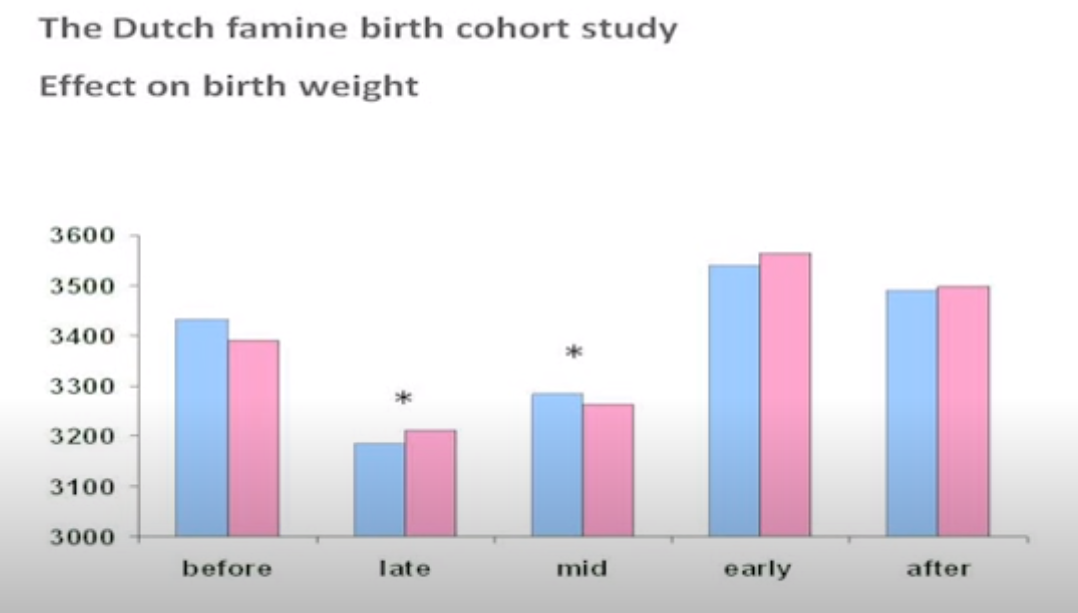
The data indicated that the children that suffered famine during their pregnancy in the mid and late parts of the pregnancy we’re born in a lower weight.
The Dutch famine babies weight at the age of 50
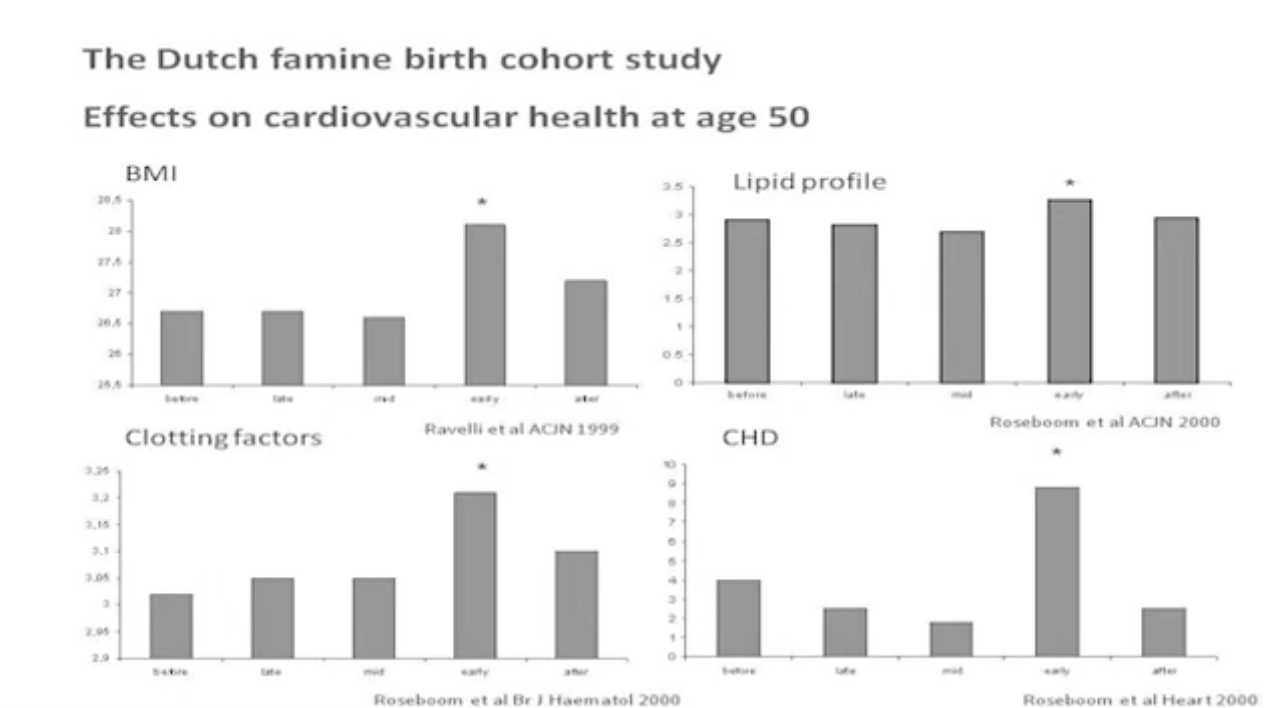
So from these numbers we can see that actually the babies that suffer the most are the ones that we’re exposed to the famine in the early part of the pregnancy, they suffer more the the other groups:
- Glucose tolerance
- Obesity
- High cholesterol
- Perceived health
- Cardiovascular disease and mortality
- Breast cancer
- Depression
- Stress responsiveness
- Poor results on cognitive tasks
- Preference to fatty food
One upside of that group is: increase in reproductive success.
More info about the study
